
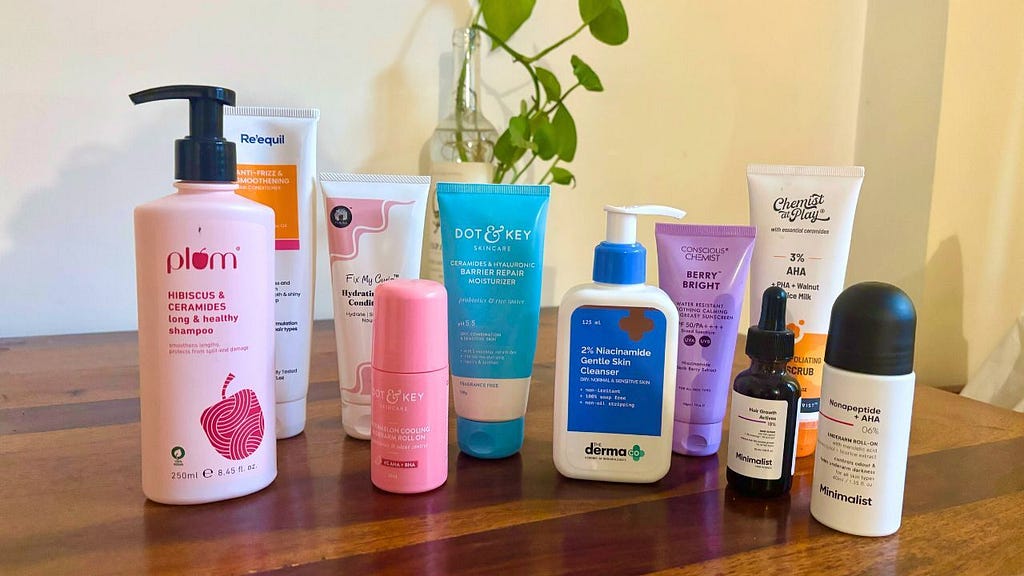

Walk into any urban Indian home today, and the change is evident. A young professional follows a multi-step skincare routine using science-backed serums ordered online. Her sibling uses a premium beard-grooming product from a digital-first brand. Their parent reaches for an Ayurvedic oil from a heritage brand now available nationwide.
What was once an occasional indulgence has become a daily ritual of self-care. Beauty and personal care in India now blends tradition with science, heritage brands with digital challengers, and wellness with aspiration.
Behind this shift is a bigger cultural change. Younger consumers increasingly view grooming as part of their everyday lifestyle and self-expression. Digital discovery, rising incomes, and growing confidence in Indian heritage ingredients are driving demand for premium, efficacious, and authentic products. The result is a beauty and personal care market that is not just growing, but fundamentally evolving.
Beauty and Personal Care is One of The Most Attractive Consumer Categories Globally
Source: BDO
While many consumer verticals continue to battle volume stagnation and margin compression, the global beauty and personal care (BPC) market stands apart as one of the most resilient and profitable plays in the entire consumer universe.
The numbers tell a compelling story. The sector expanded from $446 billion in 2018 to $576 billion in 2023 at a steady 5% CAGR. By 2028, it is projected to reach $855 billion, accelerating to an 8% CAGR, outpacing most large consumer categories and cementing BPC as a true growth engine even in uncertain macroeconomic environments.
What makes the category even more attractive is its superior economics. BPC delivers the highest gross margins among key consumer sectors, approximately 72%, comfortably ahead of fashion (54%), packaged food & beverage (44%), home & living (34%), and consumer durables (30%). This margin premium stems from strong brand loyalty, high repeat-purchase frequency, premiumisation tailwinds, and relatively low variable costs once scale is achieved.
The resilience is equally striking. In the US market in 2023, when categories such as apparel, footwear, and home decor saw negative volume growth, BPC was the only major consumer segment to deliver positive volume expansion, with prestige beauty growing at double-digit rates. This combination of consistent top-line momentum, structural margin superiority, and defensive characteristics explains why global strategists, private equity funds, and CPG incumbents continue to allocate disproportionate capital to the space.
For India, this global attractiveness is arriving at precisely the right moment. The world’s most populous young market is now ready to claim its share of this high-margin, high-growth opportunity, as the Indian BPC story moves from under-penetration to global relevance.
India’s BPC Market Is Scaling from $23 Billion Today to Become The World’s Fourth-Largest BPC Market by 2030
Source: Redseer
India is no longer a small player in global beauty; it is rapidly becoming one of the most competitive and attractive BPC markets worldwide. While the global industry grows at 8%, India’s BPC sector is expanding at a blistering 12% CAGR, the fastest among all large retail categories in the country.
This acceleration is turning India into a genuine global heavyweight:
Market size is projected to nearly double from ~$23 billion in FY25 to ~$40 billion by FY30By 2030, India will rank as the world’s fourth-largest BPC market (behind only the US, China, and Brazil)Per-capita spending remains among the lowest globally today, creating massive structural headroom as incomes rise and digital access expandsE-commerce and quick commerce are expected to drive over one-third of total spending, mimicking China’s trajectory a decade earlier
The combination of India’s youthful demographic, rising female workforce participation, and cultural shift toward daily self-care has removed the three historic barriers – access, affordability, and attitudes – that once capped the category. What was a fragmented, largely unorganised market is now professionalising at speed, making it one of the most watched investment and dealmaking opportunities in the global consumer.
Gen Z and Rising Incomes Are Rewriting the Rules of Daily Self-Care
Source: Redseer
The real force behind India’s BPC surge is not just market size, it is a fundamental shift in who is spending and why. By 2030, Gen Z and Gen Alpha together will account for 50% of total BPC spends, making them the single largest consumer cohort the country has ever seen. What was once an occasional purchase has become a daily ritual of self-expression, confidence, and wellness.
Source: Stanley Lifestyles DRHP
This generational wave is amplified by rising incomes. The number of affluent households is growing at 10% CAGR and will cross 50 million by FY27. Affluent households now contribute 10% of total PFCE, a sharp jump from just 2% earlier, unlocking wallet share for premium and masstige beauty products.
Younger consumers are driving three powerful behavioural changes: they treat grooming as lifestyle rather than hygiene, they prioritise efficacy and ingredient transparency over price alone, and they are far more open to experimenting with routines, men’s skincare, and clean/Ayurvedic formulations. The result is a market moving rapidly from functional, occasional use to high-frequency, high-value self-care, creating the perfect foundation for specific category explosions.
Source: Stanley Lifestyles DRHP
Skincare, Men’s Grooming, and Colour Cosmetics Are the Real Growth Engines
While the overall BPC market grows at 12%, three categories are pulling ahead dramatically and will account for the majority of incremental value creation through 2030. These segments are not just expanding in volume, they are redefining margins, loyalty, and brand differentiation in the Indian market.
Skincare: The undisputed leader, growing at 15-18% CAGR. Driven by the shift from basic moisturisers to targeted serums, retinoids, Vitamin C, and derma-backed routines. Ingredient transparency and the rise of 10-step rituals have turned face care into the highest-repeat, highest-margin category, with strong appeal across Gen Z and urban women.Men’s Grooming: The breakout performer at nearly 20% CAGR. Evolving rapidly from beard oil and basic face wash to full skincare, anti-ageing, and grooming regimens. Cultural barriers are crumbling fast, especially among younger men who now view grooming as daily self-care rather than occasional hygiene, creating one of the fastest-scaling sub-segments in BPC.Colour Cosmetics: Riding premiumisation and inclusivity at strong double-digit growth. Led by lip, foundation, and eye products tailored for India’s diverse skin tones and occasion-driven usage. Social media trends, hero products, and inclusive shade ranges are driving both trial and repeat purchases, particularly among Gen Z and working women.
Together, these three engines are generating the deepest profit pools and strongest brand moats in the industry, paving the way for the channel disruption and competitive intensity.
Digital and Quick Commerce Are Collapsing Discovery-to-Delivery Friction
Source: Redseer
The biggest structural unlock in India’s BPC market is happening in the channels. What used to take weeks of discovery and store visits now happens in minutes, turning one-time buyers into high-frequency, high-value customers.
E-commerce and quick commerce are no longer side channels, they are becoming the primary growth engine for India BPC:
E-commerce share is projected to jump from 8% in FY20 to 20% in FY25 and 34-38% by FY30, driving more than one-third of total BPC spends, the fastest channel shift among all Indian retail categoriesQuick commerce is the breakout format, rising from ~15% of online sales today to 30-40% by FY30, making 10-15 minute delivery the new standard for serums, face washes, and colour cosmeticsA true multi-format playbook has emerged: horizontal marketplaces (Flipkart, Amazon) for breadth, vertical specialists (Nykaa) for depth, quick commerce (Blinkit, Zepto, Swiggy Instamart) for speed, D2C brand sites for loyalty, and value commerce for Tier-2+ entrySource: Redseer
This frictionless journey, discovery on social media, purchase in one tap, delivery in minutes, has dramatically improved conversion, repeat rates, and average order values. The result is a level playing field where new-age brands can scale nationally without heavy offline investment, setting the stage for the intense competitive battle we examine next.
Legacy Giants Are Fighting Back While D2C Disruptors Redefine the Playbook
Source: Redseer
India’s BPC market is still dominated at the top. Only about 20 brands have crossed ₹1,500 crore in revenue as of FY26, the vast majority being legacy giants such as HUL, P&G, L’Oréal, Colgate-Palmolive, Marico, Dabur, and Godrej. These incumbents continue to control organised distribution and enjoy deep consumer trust built over decades.
However, a new wave of D2C disruptors – Mamaearth, Minimalist, The Derma Co., Sugar Cosmetics, Beardo, and Plum – is rapidly rewriting the rules with superior digital agility, ingredient innovation, and stronger direct consumer relationships.
In response, legacy players are fighting back aggressively through acquisitions of high-growth D2C assets, digital-first sub-brands, and private-label launches. This head-on battle between scale and speed is professionalising the entire ecosystem and pushing every player to build stronger moats.
Efficacy, Clean Beauty, and Hero Products Are Building the New Moats
In a market where discovery has become frictionless, the real differentiator is now product superiority. Brands that win are those building defensible moats around efficacy, clean formulations, and hero products that drive repeat purchases.
Efficacy and Derma-Backed Science: Consumers are moving beyond claims to demand clinically proven results; dermatologist-recommended and ingredient-led formulations (retinoids, niacinamide, peptides) are commanding premium pricing and loyaltyClean Beauty With Indian Roots: The fusion of Ayurvedic actives and clean-label transparency is resonating strongly with Gen Z; free-from parabens, sulfates, and synthetic fragrances is now table stakesHero Products and Routines: A single breakthrough SKU (serum, beard oil, or lip tint) often drives 40-50% of a brand’s revenue, while full routines boost lifetime value and stickiness
These three pillars are separating scalable winners from the rest, forcing even legacy players to invest heavily in R&D and innovation. This sets up the final question: who will capture the consolidation wave already underway?
M&A and Fundraising Signals Are Already Flashing Across the Ecosystem
Source: Tracxn
India’s BPC market has entered a clear consolidation phase. Legacy giants and strategic investors are actively acquiring high-growth D2C brands, while private equity and venture capital continue to back scalable winners with large cheques.
Source: Tracxn
Recent transactions, including Minimalist’s $350 million valuation, Honasa’s strategic moves, Dot & Key’s acquisition, and multiple other nine- and ten-figure deals, highlight that unit economics, omnichannel strength, and proven loyalty have become table stakes. Global beauty majors and domestic incumbents are using M&A to fast-track digital capabilities and premium portfolios, while successful new-age players are attracting both growth capital and exit opportunities.
This surge in deal activity signals that the era of easy funding is giving way to a sharper focus on profitability and scale, exactly the themes that will define the winners of the next decade.
The Road Ahead: Strategic Playbook for Founders, Investors and Dealmakers
As India’s BPC market races toward $40 billion, the next five years will belong to those who combine scale with sharp execution. Consolidation is inevitable, and only brands that master the new rules will capture disproportionate value.
Build Omnichannel Defensibility: Winners will own quick commerce + D2C + selective offline, not rely on any single formatObsess Over Profitability, Not Just Growth: Focus on hero products, marketing ROI, and gross margins above 55% to survive the funding winterExpand Into Tier-2/3 With Localisation: Culturally relevant formulations and last-mile plays will unlock the next 40% of the marketPrioritise M&A as a Core Strategy: Incumbents should acquire digital moats; new-age brands should prepare for strategic exits
For investors and dealmakers, the message is clear: back founders who have already proven unit economics and loyalty. The beauty revolution in India is no longer about potential; it is about who executes best in the world’s most exciting consumer opportunity.
India’s BPC sector is at a defining inflection. From fragmented, legacy-dominated roots, it is professionalizing into a digitally native, premium-oriented ecosystem fueled by premiumization, ingredient innovation, mainstreaming men’s grooming, and omnichannel reach. By 2030, India is set to rank among the world’s top four BPC markets, with per-capita spends still offering vast headroom. Success will hinge on addressing Indian-specific needs: transparency, efficacy for diverse skin types, cultural resonance, and frictionless journeys from discovery to delivery.
D2C pioneers have proven scalable economics; incumbents are acquiring disruptors; globals are deepening presence. Consolidation via M&A and strategic fundraising will accelerate as scale and differentiation become essential. Beyond aesthetics, this revolution embodies confidence, wellness, and aspiration in India’s youthful economy. Those shaping transactions and backing resilient platforms will capture enduring value in one of the country’s most dynamic consumer narratives.
If you are a founder building an interesting Consumer Brand and are looking to raise capital or explore M&A opportunities, please reach out to udayan@loestro.com. We’d love to have a chat.
LoEstro Advisors is an investment banking firm specializing in sell-side fundraising and M&A advisory, along with a strong consulting arm. Recognized as the #1 financial advisor in education in India, we are the advisor of choice to India’s blue-chip education businesses.
Over the last six years, we have grown to be one of India’s largest (in terms of M&A transactions) homegrown boutique investment banks, with $1.5 bn+ worth of combined deals closed across education, healthcare, consumer, and technology sectors.