
Unveiling Intimacy: Why India’s Lingerie Market is the Next Consumer Fit Revolution

India’s lingerie and intimates market is quietly heating up, but it’s still far from polished. Traditional players like Jockey, Shoppers Stop, and legacy hosiery brands have long held the fort with dependable basics, easy availability, and that familiar comfort in department stores or local outlets. They’ve kept things simple and reliable, which built loyalty but often left the category feeling like an afterthought: limited privacy, little guidance, and a basics-first focus.
The tide is turning, though. Women are increasingly chasing better fit, occasion-driven styles – bridal, festive, premium sensuality – and a shopping experience that feels empowering rather than awkward. That’s opening doors for fresh approaches. Experiential formats are emerging, with larger, privacy-focused stores and trained staff to guide choices, while digital-first brands like Zivame and Clovia have scaled online, using smart sizing tools and exclusive outlets to reach more cities.
This shift marks a real fit revolution in a fragmented space. We’ll look at the persistent gaps, how old-school and new players are tackling them differently, and what it signals for the future.
India’s Lingerie Market is a Massive Opportunity Held Back by Broken Consumer Experiences
Source: Research and Markets
India’s lingerie and intimates sector is one of those under-the-radar giants in the consumer space, clocking in at around ₹40,000-50,000 crore today, with projections to nearly double by 2030, fueled by a healthy CAGR of 10-12%. That’s a market bigger than many flashy categories like ready-to-drink beverages or protein supplements, yet it feels oddly stuck in the past. Urbanization, a swelling middle class, and more women entering the workforce are supercharging demand, but the real kicker is how fragmented and unorganized it remains – over 70% still dominated by local hosiery shops and unbranded basics that prioritize volume over vibe.
What holds it back isn’t supply; it’s the clunky consumer journey that turns shopping into a hassle. Traditional setups often bury lingerie in crowded multi-brand sections with zero privacy, leaving buyers feeling exposed or underserved. And while online channels have grown, they grapple with intangibles like fit accuracy and tactile feel, leading to sky-high return rates that erode trust and margins.
Multiple core structural gaps are creating white space for savvy players:
Underpenetrated Organized Retail: Despite growth, premium, women-centric formats are scarce, with most sales being funnelled through generic outlets that lack dedicated space or expertise, missing out on Tier-2 and beyond markets.Offline Discovery Frictions: In-store experiences are often impersonal – think minimal assistance, cluttered displays, and no guidance on sizing or styling, which discourages impulse buys and repeat visits.Online Limitations: Digital models shine on accessibility but falter on decision-making; without try-ons, consumers face high uncertainty, especially in a category where fit is everything, resulting in 30-40% returns in some segments.Misaligned Global Offerings: International brands enter with premium pricing but often ignore Indian body types, preferences, or cultural nuances, leaving room for localized innovation.
This broken ecosystem isn’t a dead end; it’s a goldmine. With strong tailwinds like rising disposable incomes and fashion awareness, the market screams for formats that fix these pain points, turning everyday essentials into empowering choices.
Consumers are Moving Beyond Basics Towards Fit, Feel, and Occasion-Driven Purchases
The days of treating lingerie as a purely functional purchase are fading fast. Indian women are increasingly viewing intimates as an extension of personal style, confidence, and self-expression, shifting the category from “basics bought in bulk” to thoughtful, occasion-led choices.
Rising disposable incomes, greater fashion awareness, and a cultural shift toward body positivity and openness are the main drivers. Millennials and Gen Z, especially in metros and Tier-2 cities, now prioritize fit, fabric quality, and feel over mere coverage. Comfort features like seamless designs, breathable materials, and wire-free support are becoming table stakes, while sustainability (organic cotton, recycled fabrics) and size inclusivity are gaining serious traction.
Key trends capturing this pivot:
Occasion-Led Demand is Surging: Bridal sets, festive lingerie, honeymoon wear, date-night styles, and seasonal collections now command premium pricing and drive higher average order values.Indian Sensuality is Emerging as a High-Growth White Space: Culturally relevant designs blending tradition with modern sensuality, where no large-scale Indian brand has yet dominated, and Western players often miss the mark on fit and pricing.Fit and Personalization are Non-Negotiable: Consumers reject one-size-fits-all basics and seek guided consultations or accurate sizing tools to reduce purchase anxiety.Self-Expression and Inclusivity: Bolder colours, patterns, and diverse body representations are helping lingerie double as a tool for empowerment.
This behavioral change is creating deeper wallet share: higher AOVs, more frequent repeats, and willingness to pay for quality and relevance. Brands that align with these evolving preferences, moving beyond functional to fit-, feel-, and occasion-driven, are positioned to capture the next wave of growth in this market.
Traditional Players Still Anchor The Market But Face Mounting Challenges in a Changing Landscape
Legacy players like Jockey, Shoppers Stop, and regional names such as Balaji Hosiery continue to anchor India’s lingerie market. They dominate through strong brand trust, extensive distribution networks, and reliable everyday basics that reach deep into Tier-2 and smaller towns.
Their core advantage remains scale and accessibility, delivering functional, affordable intimates in multi-brand outlets and department stores without needing specialized formats.
Yet they are increasingly under pressure. Consumers now demand greater privacy, expert fit guidance, and occasion-driven premium styles, areas where traditional setups often fall short, treating lingerie as a secondary category with limited personalization or dedicated space. Newer experiential and digital formats are capturing urban and premium demand by directly addressing these exact pain points. Legacy brands must adapt through stronger omnichannel play, better curation, and trust-building experiences to stay competitive in this evolving landscape.
Experiential Retail is Stepping in to Fix Privacy, Guidance, and Conversion Pain Points
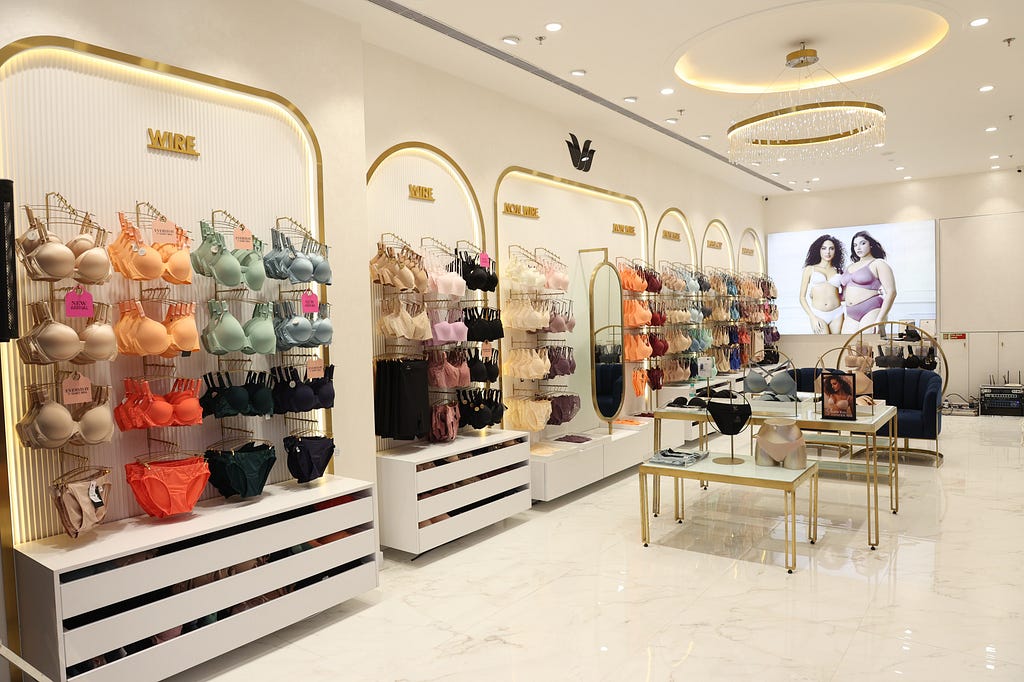
Experiential retail formats are emerging as a powerful response to the longstanding frictions in India’s lingerie category, where hesitation, lack of privacy, and poor assistance have long deterred confident purchases. These premium, large-format stores prioritize comfortable, aspirational environments with privacy-first layouts, clutter-free displays, and curated assortments that make shopping feel empowering rather than awkward.
At the core is guided selling by trained, women-led teams who provide personalized fit consultations, styling advice, and assisted discovery, turning passive browsing into informed decisions that boost conversion rates and basket sizes. High-incentive models for staff further drive productivity and service quality, while multi-category presentations encourage cross-selling across bras, nightwear, shapewear, and occasion-led styles.
Savvyy offers a compelling case study of this model in action. Operating premium large-format stores (around 2,000-2,700 sq.ft.) with privacy-led designs and expert “Sales Queens” for guided fit and styling support, Savvyy has built trust as a one-stop destination across bras, Indian sensuality, nightwear, and adjacencies.This focus on personalized, low-hesitation experiences has driven standout outcomes, including a 40% repeat rate among customers, well above typical category norms, alongside category-leading metrics like ₹50 lakh MRR per flagship store and 20-25% store-level EBITDA margins. Bootstrapped and profitable, the model demonstrates how experiential retail can foster retailer loyalty over brand loyalty, turning one-time buyers into recurring, high-AOV customers in a fragmented market.
Digital-First Brands are Making Intimates More Accessible and Personalized Than Ever
Digital-first brands have revolutionized lingerie shopping in India by removing many traditional barriers, bringing convenience, vast choice, and tech-driven personalization straight to consumers’ screens. Starting as pure-play online platforms, they’ve used data, AI-powered sizing tools, detailed product visuals, virtual try-ons (in some cases), and inclusive size ranges to build confidence in purchases that once required in-person trial. This has democratized access to premium, fit-focused intimates, especially for women in Tier-2 and Tier-3 cities who lacked nearby organized retail options.
These brands excel at discovery and education: curated recommendations, fit quizzes, customer reviews, and content around body positivity help reduce hesitation and returns while driving higher average order values through cross-sell (e.g., matching sets, nightwear, shapewear). Many have evolved into hybrid models, opening exclusive brand outlets (EBOs) to blend online discovery with offline touch-and-feel, creating seamless omnichannel journeys that cater to both digital natives and traditional shoppers.
Zivame stands out as a prime example of this evolution. Launched as an online pioneer in 2011, Zivame has grown into India’s leading intimate wear brand by leveraging smart sizing algorithms, extensive catalogs (over 50,000 styles), and a strong focus on inclusivity across sizes and body types.With Reliance’s backing, it has aggressively expanded offline, operating 174 exclusive brand outlets as of early 2026 and planning 60-80 more franchise-led stores in smaller cities. This hybrid approach has helped Zivame turn profitable recently, tap deeper into non-metro demand, and make personalized, high-quality intimates far more accessible nationwide while maintaining its digital edge in discovery and convenience.
Premiumization and Multi-Category Strategies are Redefining Product Playbooks
The Indian lingerie market is clearly tilting toward premiumization, with consumers moving away from pure price-driven basics toward higher-quality fabrics, refined designs, superior fit, and elevated aesthetics. Rising incomes and greater fashion awareness are making women more willing to invest in everyday luxury and comfort that feels special rather than purely functional.
Brands are responding by expanding beyond narrow core ranges (bras and panties) into broader multi-category portfolios, positioning themselves as complete intimates destinations. This includes nightwear, shapewear, swimwear, active-inspired pieces, and occasion-specific collections, driving cross-sell opportunities, higher average order values, and more frequent repeat purchases.
Transactions in The Space Signal Rising Investor Interest in Lingerie and Intimates
Investor enthusiasm for India’s lingerie sector has surged in recent years, drawn by its robust fundamentals: a massive, underpenetrated market with 8-11% CAGR, driven by premiumization, rising female workforce participation, and cultural shifts toward self-expression and body positivity.
The category’s fragmentation, dominated by unorganized players, creates ripe opportunities for organized brands to consolidate share through innovative formats that address discovery, fit, and privacy frictions. Capital flows reflect a bet on models that can scale efficiently while tapping underserved segments like Indian sensuality and occasion-led styles.
Key insights emerging include a preference for bootstrapped or early-profitable ventures that demonstrate strong unit economics. Investors are prioritizing omnichannel strategies blending experiential retail with digital layers to drive loyalty, higher AOVs, and repeat rates. Private-label scaling is another draw, offering margin expansion and differentiation in a space where global brands struggle with local fit and pricing.
Looking ahead, investors are zeroing in on expansions into Tier-2+ markets, supply-chain resilience, and sustainability/inclusivity features that align with evolving consumer values. The focus is on thoughtful scale: brands with proven retailer loyalty, multi-category depth, and data-driven personalization stand out as high-potential bets in this next consumer revolution.
Challenges Persist, But The Future Holds Strong Opportunities For Thoughtful Scale
The lingerie and intimates market in India still faces real headwinds. Cultural taboos around intimate apparel create ongoing hesitation, especially in smaller towns where privacy remains a concern. Fit and sizing inconsistencies, particularly for diverse Indian body types, drive high online returns and purchase anxiety across channels. Supply-chain dependencies on imports for premium fabrics add cost and complexity, while price sensitivity in mass segments limits broad premium adoption. Intense competition from both unorganized local players and global brands keeps margins tight for emerging challengers.
Yet these challenges are opening up meaningful white space in a market projected to grow at 8-11% CAGR toward a multi-billion-dollar scale by the early 2030s. Rising incomes, cultural liberalization, and digital tailwinds are creating demand for better discovery, inclusivity, and trust-focused experiences.
Key things for founders and operators to watch:
Prioritize fit innovation and localized assortments (especially Indian sensuality and occasion-led ranges) to cut returns and lift repeat ratesScale private labels aggressively for margin control, differentiation, and wallet-share capture in underserved segmentsBlend offline intimacy (privacy, guided selling) with profitable D2C layers for true omnichannel reach
For investors, focus on:
Models showing strong unit economics, high monthly revenue per store, 20%+ EBITDA margins, and quick paybacksProven scalability in high-potential markets with bootstrapped profitability as a foundationSupply-chain resilience and consumer willingness to pay premiums for quality, fit, sustainability, and empowerment
The sector rewards players who solve real consumer frictions thoughtfully, turning a fragmented, experience-poor category into one of India’s next high-growth, high-margin consumer opportunities.
India’s lingerie world is moving beyond everyday essentials toward something more personal and expressive, and the momentum feels genuine. Established names like Jockey and Shoppers Stop still command huge trust and reach, but adapting with better omnichannel play, privacy, and curated touches will be key to holding ground. Newer entrants, whether through bold in-store experiences or digital discovery, are highlighting untapped potential in fit, occasion-led ranges, and trust-building.
For founders, operators, and investors, it’s straightforward: focus on solving real consumer hesitations, tailor to Indian preferences, blend offline intimacy with online convenience, and scale thoughtfully. Get that right, and there’s serious wallet share to capture from a demographic ready for change. At LoEstro Advisors, we’re excited to keep backing the ideas reshaping India’s consumer landscape, one thoughtful step at a time.
If you are a founder building an interesting Consumer Brand and are looking to raise capital or explore M&A opportunities, please reach out to udayan@loestro.com. We’d love to have a chat.
LoEstro Advisors is an investment banking firm specializing in sell-side fundraising and M&A advisory, along with a strong consulting arm. Recognized as the #1 financial advisor in education in India, we are the advisor of choice to India’s blue-chip education businesses.
Over the last four years, we have grown to be one of India’s largest (in terms of M&A transactions) homegrown boutique investment banks, with $1.5 bn+ worth of combined deals closed across education, healthcare, consumer, and technology sectors.